
Excavation sets the baseline for everything that follows, foundations, drainage, utilities, and site access. In and around Ithaca, soil variability, slopes, and seasonal moisture make contractor selection more than a price comparison.
A structured set of questions helps you evaluate capability, not just availability. The goal is to confirm that the contractor can manage your site conditions, coordinate permits, and deliver consistent results.
Below are seven questions that surface the details that matter.
1) What Similar Projects Have You Completed in Ithaca?
Local experience matters because conditions vary within short distances.
Ask for:
- Recent projects in Finger Lakes terrain
- Before-and-after photos
- References for comparable scopes (driveways, foundations, drainage, lakefront work)
You’re looking for pattern recognition. A contractor who has handled similar soils and slopes will anticipate issues earlier.
2) How Do You Evaluate Site Conditions Before Starting?
A contractor should explain a repeatable assessment process.
Expect details on:
- Soil type identification (clay, silt, sand, mixed)
- Groundwater considerations
- Slope and runoff mapping
- Access constraints for equipment
A clear pre-construction assessment reduces change orders and keeps the schedule stable.
3) What Permits and Local Requirements Will You Handle?
Excavation often triggers permits and inspections.
Clarify:
- Which permits are required in Ithaca
- Who pulls them
- How inspections are scheduled
- Any erosion control or stormwater requirements
A contractor who manages this process reduces delays tied to compliance and scheduling.
4) How Will You Manage Drainage and Water Flow?
Water control is central to sitework in this region.
Ask how they plan to:
- Direct surface runoff away from structures
- Install subsurface drainage where needed
- Prevent erosion on slopes
- Define safe discharge points
A complete answer should connect grading, drainage systems, and long-term stability, not just a single fix.
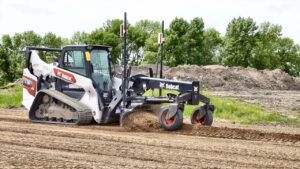
5) What Equipment Will You Use, and Is It Appropriate for the Site?
Equipment choice affects efficiency and site impact.
Confirm:
- Machine size relative to access constraints
- Availability of compact equipment for tight areas
- Ability to handle rock, wet soils, or steep grades
The right equipment reduces disruption and improves precision.
6) How Do You Structure Timeline and Cost?
Clear expectations prevent scope drift.
Ask for:
- A defined project timeline (start, key phases, completion)
- What is included in the estimate
- How changes are handled
- Payment milestones
Look for a breakdown that ties cost to specific tasks, clearing, excavation, grading, hauling, and restoration.
7) What Happens If Site Conditions Change?
Subsurface conditions can differ from initial assumptions.
A capable contractor will outline:
- How they identify changes (e.g., unexpected groundwater, unstable soils)
- How they communicate impacts
- How pricing adjustments are handled
- Options to keep the project on track
This is where experience shows up. A structured response indicates controlled risk, not improvisation.
Red Flags to Watch For
- Vague answers about permits or inspections
- No recent local project references
- One-size-fits-all drainage plans
- Unclear scope or lump-sum pricing without detail
- Limited discussion of contingencies
These signals usually translate into delays or rework later.
What a Well-Run Excavation Process Looks Like
| Phase | What to Expect |
| Assessment | Site review, soil and drainage analysis |
| Planning | Scope definition, permits, scheduling |
| Execution | Clearing, excavation, grading, drainage installation |
| Verification | Final grading checks, drainage flow confirmation |
| Closeout | Site cleanup, documentation, handoff |
Consistency across these phases matters more than speed alone.
Why Local Coordination Matters
Excavation sits at the intersection of multiple trades:
- Foundation contractors
- Utility installers
- Surveyors
- Inspectors
A contractor who coordinates these roles reduces idle time and sequencing issues. In areas like Ithaca, where site conditions can shift quickly with weather, coordination directly affects timelines.
Practical Example
Two projects start with similar scopes.
Project A
- Minimal site assessment
- Generic drainage plan
- Reactive adjustments
Outcome: Schedule extensions, added costs, drainage rework.
Project B
- Detailed pre-assessment
- Site-specific grading and drainage
- Clear permit coordination
Outcome: Predictable timeline, stable site conditions, fewer changes.
The difference comes from process discipline, not project size.
Final Thoughts
Choosing an excavation contractor is a risk decision. The right questions reveal how a contractor plans, communicates, and adapts to site conditions.
Focus on:
- Local experience
- Clear assessment methods
- Defined scope and timelines
- Integrated drainage planning
- Structured contingency handling
These factors determine whether the project proceeds smoothly or requires repeated correction.
Need an Excavation Contractor in Ithaca?
If you’re planning sitework and want a contractor who handles assessment, drainage, and execution as a single system, connect with Finger Lakes Earthworks.
A site-specific approach keeps excavation aligned with your project timeline and long-term performance.