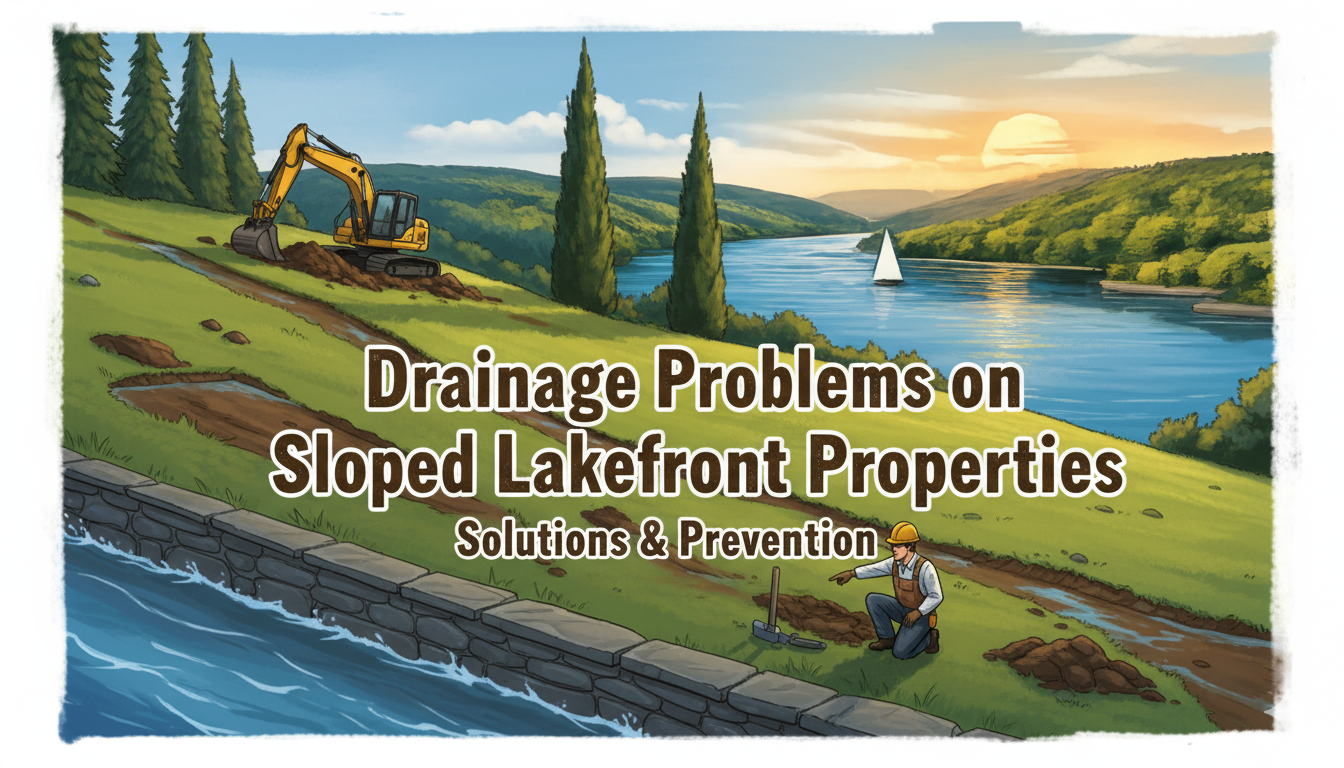
Sloped lakefront properties look straightforward until water starts moving. Gravity, soil type, and proximity to the shoreline combine to create complex drainage patterns. What begins as surface runoff often turns into erosion, saturated soil, or structural instability.
Managing these sites requires more than basic grading. It involves controlling how water moves across and through the property, without disrupting the surrounding landscape.
Contractors like Finger Lakes Earthworks approach these projects with a structured process built around site conditions, not assumptions.
Why Sloped Lakefront Sites Are Challenging
Lakefront slopes introduce variables that flat sites don’t have.
Key factors:
1. Gravity-Driven Water Flow
Water accelerates as it moves downhill, increasing erosion potential.
2. Saturated Soil Conditions
Proximity to the lake raises groundwater levels, keeping soil consistently moist.
3. Variable Soil Composition
Common materials include:
- Loose topsoil
- Clay layers
- Gravel pockets
Each layer handles water differently.
4. Shoreline Sensitivity
Improper drainage solutions can destabilize the shoreline or affect water quality.
These conditions require a controlled drainage strategy rather than isolated fixes.
Common Drainage Problems on Sloped Lakefront Properties
1. Surface Runoff Erosion
Rainwater flows downhill, carrying soil with it. Over time, this creates channels and exposes roots or foundations.
2. Standing Water and Saturation
Water collects in low areas or behind retaining structures, leading to soggy ground and reduced usability.
3. Slope Instability
Excess moisture weakens soil structure, increasing the risk of shifting or minor slides.
4. Water Intrusion Near Structures
Runoff directed toward the home or outbuildings leads to foundation moisture issues.
5. Washed-Out Landscaping
Mulch, topsoil, and plantings are displaced during heavy rain events.
Each issue connects back to how water is or isn’t being controlled.
How We Approach Difficult Drainage Sites
A functional solution starts with understanding the site in detail.
1. Site Assessment and Water Mapping
The first step is identifying how water behaves naturally.
This includes:
- Tracking runoff paths
- Identifying low points
- Evaluating soil absorption rates
Instead of forcing water in a new direction immediately, the goal is to work with existing flow patterns.
2. Grading and Surface Shaping
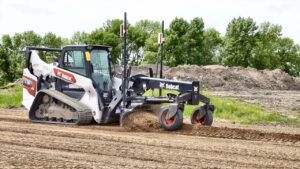
Grading adjusts how water moves across the surface.
Key considerations:
- Redirecting flow away from structures
- Creating controlled drainage paths
- Maintaining slope stability
Minor grading changes often produce significant improvements when applied correctly.
3. Subsurface Drainage Systems
Surface control is only part of the solution. Water below the surface must also be managed.
Common systems include:
- French drains
- Perforated pipe systems
- Drainage trenches
These systems collect and redirect water before it saturates critical areas.
4. Erosion Control Measures
On sloped sites, erosion control is essential.
Techniques include:
- Installing erosion control fabric
- Using stone or riprap for reinforcement
- Stabilizing soil with vegetation
These measures prevent soil displacement while maintaining drainage flow.
5. Retaining and Structural Support
In some cases, structural solutions are required.
These may include:
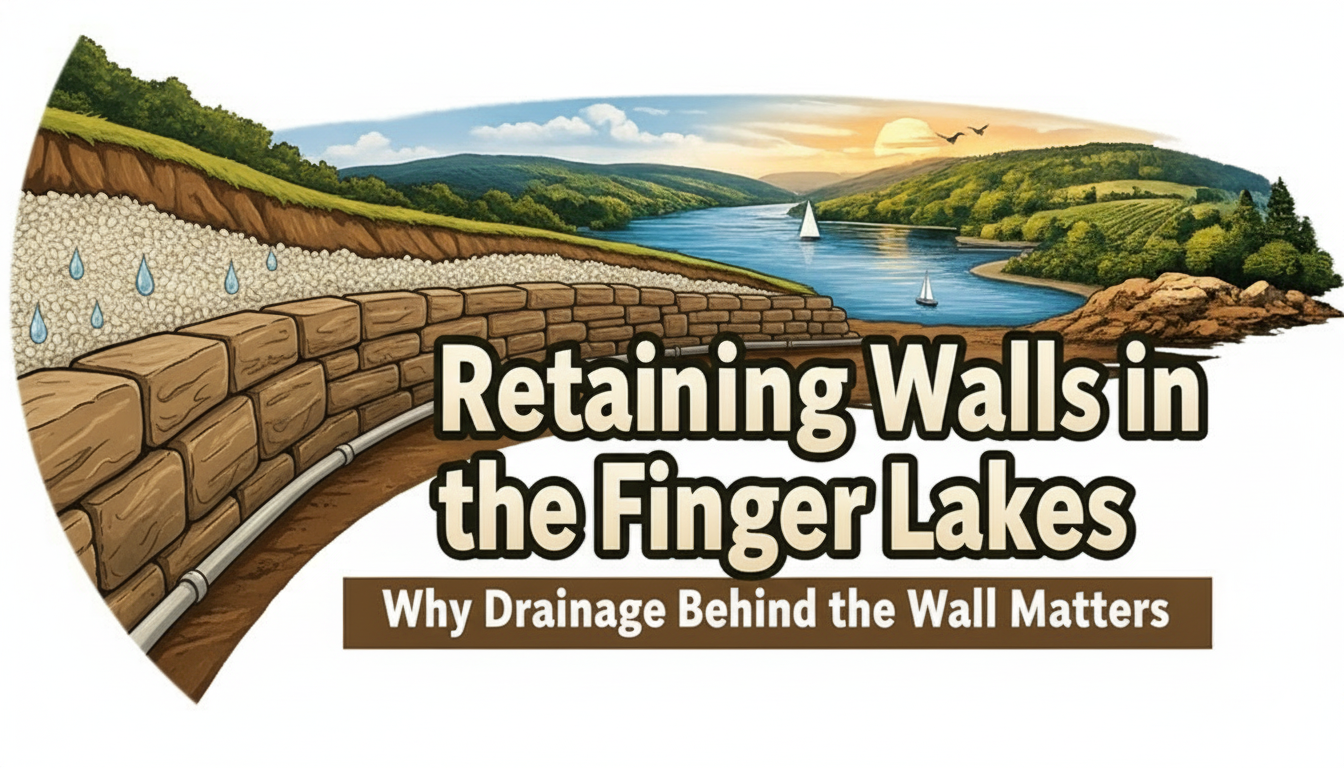
- Retaining walls
- Reinforced slopes
- Terracing
The goal is to stabilize the slope while integrating drainage pathways.
6. Controlled Water Discharge
All collected water needs a safe discharge point.
This involves:
- Directing water away from structures
- Preventing concentrated flow at the shoreline
- Ensuring compliance with local regulations
Improper discharge can create new problems downstream.
Why One-Size Solutions Don’t Work
Standard drainage fixes often fail on sloped lakefront properties because they don’t account for site variability.
Common mistakes:
- Installing drains without proper grading
- Ignoring subsurface water movement
- Over-relying on a single solution (e.g., one drain system)
- Discharging water without considering erosion impact
Effective drainage requires a combination of systems working together.
Practical Example
Two similar lakefront properties face runoff issues.
Property A:
- Installs a basic surface drain
- Does not address subsurface water
Result:
- Continued saturation
- Ongoing erosion
Property B:
- Assesses full water flow
- Implements grading, drainage, and stabilization
Result:
- Controlled runoff
- Stable slope
- Improved usability
The difference comes from system design, not just installation.
Long-Term Maintenance Considerations
Drainage systems require periodic checks to remain effective.
Key maintenance tasks:
- Clearing debris from drainage paths
- Inspecting pipes and outlets
- Monitoring erosion-prone areas
- Maintaining vegetation cover
Consistent maintenance prevents small issues from becoming larger problems.
When to Address Drainage Issues
Early intervention reduces cost and complexity.
Signs to act:
- Visible erosion channels
- Persistent wet areas
- Soil movement on slopes
- Water pooling near structures
Delaying repairs increases the scope of work required.
Final Thoughts
Sloped lakefront properties require a coordinated approach to drainage. Surface grading, subsurface systems, and erosion control must work together to manage water effectively.
There is no single fix. The solution depends on how water moves across and through the site.
Need Help With a Challenging Drainage Site?
If you’re dealing with runoff, erosion, or slope instability, a structured evaluation is the first step.Connect with Finger Lakes Earthworks. A site-specific drainage plan helps control water flow, protect your property, and maintain long-term stability.